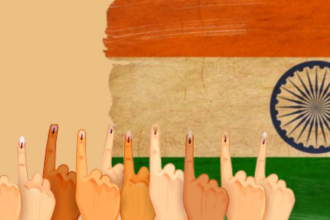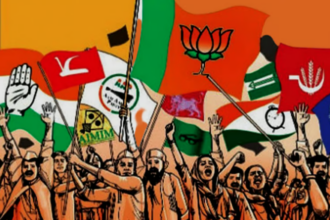

In a democracy, power should not be concentrated in the hands of one person or group. Power sharing means the distribution of power among different organs of government, levels of government, social groups and political parties. It is essential for maintaining unity, stability and harmony in a diverse country. Through examples of Belgium and Sri Lanka, the chapter explains how sharing power strengthens democracy, while its absence leads to conflict and violence.
INTRODUCTION
What is Power Sharing?
- Power sharing means distribution of power among different organs of government, levels of government, social groups and political parties.
- It ensures that no single person or group has all the power.
Why is Power Sharing Needed?
- Prevents conflict
- When power is concentrated in one hand, it can lead to social conflict and violence.
- Ensures political stability
- Sharing power helps in maintaining unity and stability in a country.
- Promotes democracy
- Democracy is based on the idea that people have a say in governance.
- Protects minority interests
- Power sharing helps in giving voice to minorities and weaker sections.
Example Given in the Introduction (Belgium & Sri Lanka)
- The chapter begins with examples of Belgium and Sri Lanka to show:
- How sharing power peacefully (Belgium) helps maintain harmony.
- How not sharing power (Sri Lanka) leads to conflict.
Key Idea of the Chapter
- Power sharing is the very spirit of democracy.
- It is not only good but necessary for the survival of a country with diverse communities.
Topic-1: Belgium and Sri Lanka
Belgium: A Case of Successful Power Sharing
- Belgium is a small country in Europe with diverse population.
- Composition of population:
- 59% live in the Flemish region and speak Dutch
- 40% live in the Wallonia region and speak French
- 1% speak German
- In the capital city Brussels:
- 80% French-speaking
- 20% Dutch-speaking
Problem in Belgium
- French-speaking minority was economically and politically powerful.
- This caused tension and conflict between Dutch and French communities.
Solution Adopted by Belgium
Belgium adopted power sharing arrangements:
- Equal number of Dutch and French ministers in the central government.
- State governments were given powers.
- Community government was formed to look after cultural, educational and language issues.
Result:
- Peace and stability
- No civil war
- Unity of the country maintained
Sri Lanka: A Case of Majoritarianism
- Sri Lanka is an island nation in South Asia.
- Population composition:
- 74% Sinhalese
- 18% Tamils
- Sri Lankan Tamils
- Indian Tamils
- Major religions:
- Sinhalese are mostly Buddhists
- Tamils are mostly Hindus or Muslims
Policies of Sri Lankan Government
- Adopted majoritarian policies:
- Sinhala Only Act (1956) made Sinhala the only official language.
- Gave preference to Sinhalese in government jobs and education.
- Buddhism was given special status.
Result in Sri Lanka
- Tamils felt discriminated and alienated.
- Led to protests, violence and civil war.
- Country faced political instability and economic loss.
Topic-2: Majoritarianism in Sri Lanka
What is Majoritarianism?
- Majoritarianism is a belief that the majority community should rule the country by ignoring the interests of minorities.
- In such a system, decisions are taken only in favour of the majority.
Population Composition of Sri Lanka
- 74% Sinhalese (majority)
- 18% Tamils (minority)
- Sri Lankan Tamils
- Indian Tamils
- Sinhalese are mostly Buddhists
- Tamils are mostly Hindus or Muslims
Steps Taken by Sri Lankan Government
After independence in 1948, the government adopted majoritarian policies:
- Sinhala Only Act (1956)
- Declared Sinhala as the only official language.
- Tamil language was ignored.
- Preference to Sinhalese
- Sinhalese were favoured in government jobs and education.
- Special Status to Buddhism
- Constitution gave special protection to Buddhism.
- Other religions felt neglected.
Reaction of Tamil Community
- Tamils felt discriminated and alienated.
- Demanded:
- Recognition of Tamil as an official language
- Regional autonomy
- Equal political rights
Consequences of Majoritarianism
- Peaceful protests turned into violent conflicts.
- Led to a civil war.
- Sri Lanka suffered:
- Loss of lives
- Economic damage
- Political instability
Topic-3: Accommodation in Belgium
- Accommodation means adjusting and sharing power among different social groups to avoid conflict.
- Belgium adopted accommodation to manage linguistic and cultural diversity.
Why Accommodation Was Needed in Belgium
- Belgian society was divided between:
- Dutch-speaking community
- French-speaking community
- Tension existed because French speakers were economically powerful.
- There was a risk of civil war if power was not shared.
Steps Taken by Belgium (Power Sharing Arrangements)
- Equal Representation at the Centre
- Central government had equal number of Dutch and French-speaking ministers.
- No single community could dominate.
- State Governments
- Powers were given to state governments.
- States were not subordinate to the central government.
- Community Government
- A separate community government was formed.
- It looked after cultural, educational and language matters.
- Elected by people of one language community, regardless of where they lived.
Outcome of Accommodation
- Reduced tensions between communities.
- Prevented civil war.
- Ensured political stability and unity.
- Strengthened democracy in Belgium.
Topic-4: Why Power Sharing is Desirable?
Power sharing is desirable due to two main reasons:
👉 Prudential reasons and
👉 Moral reasons
1. Prudential Reasons
- Power sharing helps to reduce social conflict.
- When power is shared among different groups, the possibility of tension and violence decreases.
- It ensures political stability and unity of the nation.
- Countries with power sharing arrangements are less likely to face civil wars.
- Example: Belgium successfully avoided conflict by sharing power.
2. Moral Reasons
- Power sharing is the spirit of democracy.
- Democracy is based on the idea that people should have a say in governance.
- It respects the will of the people.
- It promotes participation, equality and justice.
Topic-5: Forms of Power Sharing
Power sharing in modern democracies takes different forms.
1. Power Sharing among Different Organs of Government
- Power is shared among:
- Legislature (makes laws)
- Executive (implements laws)
- Judiciary (interprets laws)
- This system is called horizontal distribution of power.
- Each organ checks the power of the other.
- Example: Courts can declare laws unconstitutional.
👉 This system is known as checks and balances.
2. Power Sharing among Different Levels of Government
- Power is shared among:
- Central government
- State government
- Local government
- This is called vertical distribution of power.
- Also known as federal system.
- Example: India follows a federal system.
3. Power Sharing among Different Social Groups
- Power is shared among religious, linguistic and ethnic groups.
- Ensures participation of minorities.
- Examples:
- Community government in Belgium
- Reservation system in India for SCs, STs and OBCs.
4. Power Sharing among Political Parties, Pressure Groups and Movements
- Power is shared through:
- Political parties (ruling and opposition)
- Pressure groups
- Social movements
- Opposition parties keep a check on the government.
- Pressure groups influence policies.
Conclusion
Power sharing is the spirit of democracy. It is desirable because it reduces the chances of social conflict and ensures political stability. Power sharing also promotes participation, equality and justice by giving all sections of society a voice in governance. The experiences of Belgium and Sri Lanka clearly show that accommodation and cooperation lead to peace, whereas majoritarianism weakens democracy. Therefore, power sharing is essential for the smooth functioning and survival of a democratic system.
Full Chapter Explanation
Detailed notes of other chapters:
Federalism: Class-10th Civics Chapter-2 ( Easy NCERT Notes )