
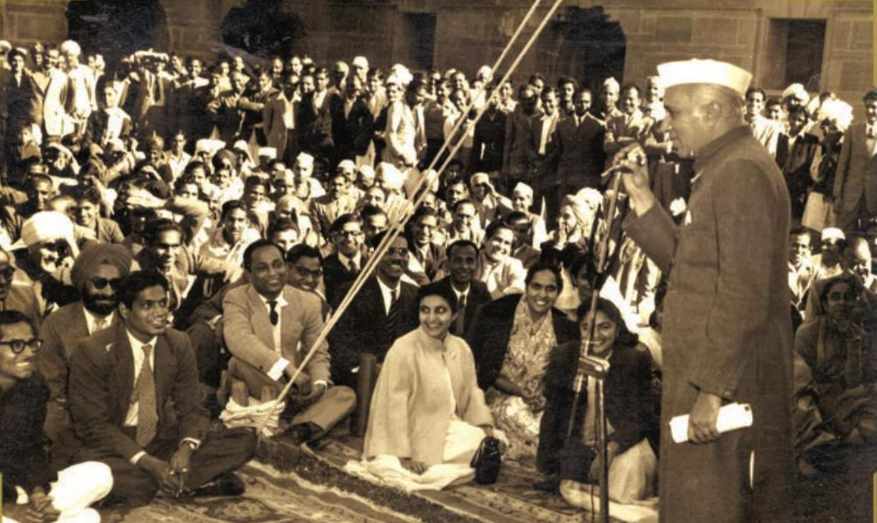
After independence, India faced major economic challenges such as poverty, unemployment, and backwardness. To overcome these problems, the country adopted a strategy of planned development through Five-Year Plans.
During this process, there were several political debates regarding the path of development, including issues like agriculture versus industry and public versus private sector. Ultimately, India chose a mixed economy model that combined elements of both socialism and capitalism.
Introduction
- After independence in 1947, India faced many serious problems such as:
- Poverty
- Unemployment
- Backward industries
- Low agricultural production
- The leaders of independent India believed that economic development was necessary to improve people’s lives.
- Therefore, the government decided to adopt planned development to rebuild the economy.
What is Planned Development?
- Planned development means that the government makes a systematic plan for economic growth and development.
- Under this system:
- The government decides priorities and goals.
- Resources are used according to a national plan.
- These plans were called Five-Year Plans.
Why Planning was Needed?
The leaders believed planning was necessary because:
- To reduce poverty and inequality.
- To increase agricultural production.
- To develop industries.
- To improve living standards of people.
Role of Planning Commission
- In 1950, the government established the Planning Commission.
- Its main functions were:
- Prepare Five-Year Plans.
- Decide how resources should be used.
- Promote economic development.
Economic Ideas Influencing Planning
Two major economic models influenced India’s planning:
- Capitalist model
- Based on private ownership and free markets.
- Example: United States.
- Socialist model
- Government controls major industries and resources.
- Example: Soviet Union.
- India adopted a mixed economy, combining features of both systems.
Topic-1: Political Contestation
- After independence, there were different opinions and debates about the best strategy for economic development in India.
- These debates among political leaders, economists, and parties are called political contestation.
Different Development Approaches
1. Industrial Development Strategy
- Many leaders believed that rapid industrialisation was necessary for economic growth.
- They argued that developing heavy industries would make the country self-reliant.
- This idea was strongly supported by Jawaharlal Nehru.
2. Agricultural Development Strategy
- Some leaders believed that the government should focus more on agriculture and rural development.
- They argued that since most people lived in villages, improving agriculture would reduce poverty and unemployment.
3. Public Sector vs Private Sector Debate
Another major debate was about the role of the government and private companies.
Public Sector
- Industries owned and controlled by the government.
- Supporters believed it would ensure social justice and equal development.
Private Sector
- Industries owned by individuals or companies.
- Supporters believed it would encourage efficiency and faster economic growth.
India adopted a mixed economy, where both sectors worked together.
Outcome of the Debate
- After discussions and debates, the government adopted a balanced approach:
- Development of heavy industries
- Support for agriculture
- Combination of public and private sectors
Topic-2: What is Left and What is Right?
- In politics, the terms Left and Right refer to different political ideologies and views about economic development.
Left Ideology
- The Left believes that the government should play a major role in the economy.
- It supports:
- Government control over important industries
- Reduction of economic inequality
- Welfare of workers and poor people
- Left parties generally support socialism and policies that promote social justice.
- In India, Left ideology is mainly represented by parties like:
- Communist Party of India (CPI)
- Communist Party of India (Marxist) (CPI-M)
Right Ideology
- The Right believes that the private sector and markets should play a larger role in the economy.
- It supports:
- Less government control
- More freedom for businesses
- Private ownership of industries
- Right ideology generally supports capitalism and free-market policies.
Importance in Indian Politics
- These ideological differences influenced debates about economic policies and development strategies after independence.
- Political parties in India often took positions towards the Left or the Right, depending on their views about the role of the state in economic development.
Topic-3: Ideas of Development
- After independence, leaders in India had different ideas about how the country should develop economically.
- These ideas focused on how to remove poverty, increase production, and improve people’s living standards.
Main Development Ideas
1. Rapid Industrialisation
- Many leaders believed that fast industrial growth was necessary for development.
- They emphasized building heavy industries like steel, machinery, and power.
- This idea was strongly supported by Jawaharlal Nehru.
2. Agricultural Development
- Some leaders argued that agriculture should be the main focus.
- Since most Indians lived in villages, improving farming would help reduce poverty and unemployment.
3. Gandhian Model of Development
- Based on the ideas of Mahatma Gandhi.
- This model emphasized:
- Village-based economy
- Small-scale industries
- Self-sufficient villages
- Less dependence on large industries.
4. Socialist Development Model
- Influenced by the economic system of the Soviet Union.
- This model supported:
- Government control over major industries
- Planning for economic development
- Reduction of inequality
Conclusion
- Finally, India adopted a mixed approach to development, combining:
- Industrial growth
- Agricultural development
- Government planning
This approach shaped India’s economic policies and Five-Year Plans.
Topic-4: Planning
- After independence, India decided to follow the strategy of planned economic development.
- Planning meant that the government would design a plan for the use of resources to achieve economic growth and social justice.
Establishment of Planning Commission
- In 1950, the government set up the Planning Commission.
Main functions:
- Prepare Five-Year Plans
- Decide development priorities
- Allocate resources for different sectors
Five-Year Plans
- Development programs were organized into Five-Year Plans.
- Each plan had specific goals for economic growth.
Main objectives:
- Increase agricultural production
- Develop industries
- Reduce poverty and unemployment
- Improve living standards
Focus of Early Planning
- Early plans focused on:
- Agricultural development
- Industrial growth
- Infrastructure development
- The Second Five-Year Plan focused more on heavy industries, influenced by the ideas of P. C. Mahalanobis.
Importance of Planning
Planning helped India to:
- Use limited resources effectively
- Promote economic development
- Reduce economic inequality
Topic-5: The Early Initiatives
- After independence, India started several early steps to promote economic development.
- These initiatives focused mainly on agriculture, land reforms, and planning.
1. Land Reforms
- One of the first important steps was land reform.
Main objectives:
- Remove the zamindari system
- Distribute land more fairly among farmers
- Reduce exploitation of tenants
- The zamindari system was abolished in many states to improve the condition of peasants.
2. Cooperative Farming
- The government encouraged cooperative farming.
Meaning:
- Farmers pool their land and resources and work together to increase production.
Purpose:
- Increase agricultural efficiency
- Help small farmers
3. Community Development Programme (1952)
- In 1952, the government launched the Community Development Programme.
Main aim:
- Promote rural development.
Focus areas:
- Agriculture
- Education
- Health
- Roads and infrastructure
4. Land Ceiling Policy
- The government also introduced land ceiling laws.
Meaning:
- A limit was placed on the maximum land a person could own.
Purpose:
- Extra land would be distributed among landless farmers.
Topic-6: The Five-Year Plans
- After independence, India adopted the system of Five-Year Plans to achieve economic development.
- A Five-Year Plan is a government plan for economic development for a period of five years.
- These plans were prepared by the Planning Commission.
Objectives of Five-Year Plans
The main goals were:
- Economic growth
- Increase in agricultural production
- Development of industries
- Reduction of poverty and unemployment
- Improvement in living standards
First Five-Year Plan (1951–1956)
- Focused mainly on agriculture and irrigation.
- Aim was to increase food production and strengthen the agricultural sector.
Second Five-Year Plan (1956–1961)
- Focused on industrial development, especially heavy industries.
- Based on the ideas of P. C. Mahalanobis.
Importance of Five-Year Plans
- Helped in systematic economic development.
- Promoted balanced development of agriculture and industry.
- Guided the use of national resources effectively.
Topic-7: Rapid Industrialisation
- After independence, leaders in India believed that rapid industrialisation was necessary for economic development.
- Industrialisation was seen as a way to:
- Increase production
- Create employment
- Reduce dependence on foreign countries
Focus on Heavy Industries
- The government decided to focus on heavy and basic industries such as:
- Steel
- Machinery
- Power
- Mining
- These industries were considered important for long-term economic growth.
Role of Public Sector
- The government established many public sector industries.
- The aim was to:
- Control key industries
- Ensure national development
- Promote economic self-reliance
Second Five-Year Plan
- The policy of rapid industrialisation was mainly implemented during the Second Five-Year Plan (1956–1961).
- It was influenced by the economic ideas of P. C. Mahalanobis.
Result
- Rapid industrialisation helped in:
- Building basic industrial infrastructure
- Strengthening India’s economic base
Topic-8: Decentralised Planning
- Decentralised planning means that planning is done at different levels—local, state, and national—rather than only by the central government.
- In India, it was realised that centralised planning alone was not enough to meet the needs of all regions.
Need for Decentralised Planning
- Different regions have different needs and problems.
- Local authorities understand local issues better.
- It helps in people’s participation in development.
Role of Local Institutions
- Institutions like:
- Panchayats (village level)
- Municipalities (urban level)
play an important role in decentralised planning.
- These bodies help in:
- Identifying local needs
- Implementing development programmes
- Ensuring better use of resources
Advantages of Decentralised Planning
- Promotes efficient use of resources
- Increases public participation
- Leads to balanced regional development
- Makes development more effective and inclusive
Topic-9: Key Controversies – Agriculture vs Industry
- After independence, there was a major debate in India about whether to give more importance to agriculture or industry.
- This debate became an important part of economic planning and development strategy.
View 1: Focus on Agriculture
Some leaders believed that agriculture should be the top priority.
Reasons:
- Majority of people depended on farming
- Needed to ensure food security
- Could reduce poverty and unemployment in rural areas
View 2: Focus on Industry
Other leaders supported rapid industrialisation.
- This view was strongly supported by Jawaharlal Nehru.
Reasons:
- Industries would lead to modernisation
- Help achieve economic growth
- Make India self-reliant
- Provide long-term development
Policy Choice
- India adopted a balanced approach, but:
- Greater emphasis was given to industrial development, especially in the Second Five-Year Plan.
- However, agriculture was not ignored, especially in the First Five-Year Plan.
Result of the Debate
- Both sectors became important for development:
- Agriculture → Short-term needs (food, employment)
- Industry → Long-term growth and strength
Topic-10: Key Controversies – Public vs Private Sector
- After independence, there was a major debate in India about the role of public sector and private sector in economic development.
Public Sector
- Public sector refers to industries owned and controlled by the government.
Supporters believed:
- Government control would ensure social justice
- Help reduce economic inequality
- Important sectors (like steel, energy) should be under state control
- Prevent exploitation by private owners
Private Sector
- Private sector refers to industries owned by individuals or companies.
Supporters believed:
- Private sector is more efficient and productive
- Encourages competition and innovation
- Leads to faster economic growth
Mixed Economy Model
- India adopted a mixed economy, combining both sectors.
- Under this system:
- Public sector controlled key and heavy industries
- Private sector operated in other areas of the economy
Role of Leadership
- Leaders like Jawaharlal Nehru supported a strong public sector, especially for major industries.
Topic-11: Major Outcomes
- The policy of planned development in India led to several important results in the economy.
1. Economic Growth
- India achieved a moderate rate of economic growth.
- Growth was steady but not very fast compared to some other countries.
2. Development of Industrial Base
- Strong focus on heavy industries helped build a solid industrial base.
- India became more self-reliant in many sectors.
3. Growth in Agriculture
- Agricultural production increased over time.
- However, growth was not uniform in all regions.
4. Reduction in Poverty (Limited)
- Some progress was made in reducing poverty, but:
- Poverty was not completely eliminated
- Inequality still remained
5. Public Sector Expansion
- The public sector expanded significantly.
- Government controlled many key industries and services.
6. Regional Imbalances
- Development was uneven across regions.
- Some states progressed faster, while others remained backward.
Topic-12: Major Outcomes – Foundations
- Planned development in India helped in building a strong foundation for future economic growth.
1. Strong Industrial Base
- Focus on heavy industries led to the creation of:
- Steel plants
- Machine tools
- Power projects
- This made India more self-reliant and reduced dependence on imports.
2. Infrastructure Development
- Development of basic infrastructure such as:
- Transport (roads, railways)
- Electricity (power generation)
- Irrigation systems
- These were essential for both agriculture and industry.
3. Expansion of Public Sector
- The government set up many public sector enterprises.
- These industries controlled key sectors of the economy, ensuring:
- National control over resources
- Balanced economic development
4. Institutional Framework
- Important institutions like the Planning Commission were established.
- These institutions helped in:
- Systematic planning
- Efficient use of resources
Topic-13: Major Outcomes – Land Reforms
- Land reforms were an important part of planned development in India.
- The aim was to improve the condition of farmers and reduce inequality in land ownership.
Main Measures of Land Reforms
1. Abolition of Zamindari
- The zamindari system was abolished.
- It removed middlemen (zamindars) between the government and farmers.
- Farmers got direct ownership of land.
2. Land Ceiling Laws
- A limit was fixed on the maximum land a person could own.
- Extra land was supposed to be distributed among landless farmers.
3. Tenancy Reforms
- Tenants were given:
- Security of tenure (protection from eviction)
- In some cases, ownership rights
Achievements
- Zamindari system was successfully abolished in most areas.
- Helped reduce exploitation of farmers.
- Some land was redistributed to landless people.
Limitations
- Land ceiling laws were not properly implemented everywhere.
- Many landlords found loopholes to keep extra land.
- Benefits did not reach all poor farmers.
Topic-14: The Green Revolution
- The Green Revolution was a major agricultural programme started in India during the 1960s to increase food production.
- It aimed to make India self-sufficient in food grains.
Features of Green Revolution
- Use of High Yielding Variety (HYV) seeds
- Increased use of fertilisers and pesticides
- Expansion of irrigation facilities
- Use of modern technology and machinery
Areas of Implementation
- It was mainly implemented in regions with good irrigation, such as:
- Punjab
- Haryana
- Uttar Pradesh
Achievements
- Significant increase in food grain production
- India became more self-reliant in agriculture
- Reduced dependence on food imports
Limitations
- Benefits were limited to certain regions only
- Increased regional inequality
- Favoured rich farmers who could afford modern inputs
- Environmental issues due to overuse of chemicals
Topic-15: The White Revolution
- The White Revolution was a major agricultural movement in India aimed at increasing milk production.
- It is also known as Operation Flood.
Objectives
- Increase milk production
- Improve income of rural farmers
- Make India one of the largest producers of milk
Key Features
- Development of a nationwide milk grid
- Formation of milk cooperatives
- Better transport and storage facilities
- Use of improved breeding and veterinary services
Role of Cooperatives
- Farmers joined cooperative societies to:
- Sell milk at fair prices
- Eliminate middlemen
- Increase their income
- A famous example is Amul.
Leadership
- The movement was led by Verghese Kurien, known as the Father of White Revolution in India.
Achievements
- India became one of the largest producers of milk in the world
- Improved rural economy
- Increased employment opportunities
Topic-16: Major Outcomes – Later Developments
- Over time, economic planning in India underwent significant changes and reforms.
1. Shift in Economic Policies
- By the 1980s and 1990s, it was felt that:
- Economic growth was too slow
- Public sector was becoming inefficient
- This led to a rethinking of development strategies.
2. Economic Liberalisation
- In 1991, India introduced economic reforms known as liberalisation.
Main features:
- Reduced government control over the economy
- Encouraged private sector participation
- Opened economy to foreign investment
3. Decline of Planning Commission
- The role of centralized planning reduced over time.
- The Planning Commission was eventually replaced by NITI Aayog in 2015.
4. Growth with Inequality
- Economic reforms led to faster growth, but:
- Income inequality increased
- Benefits were not equally distributed
5. Greater Role of Market
- The economy moved towards a more market-oriented system.
- Private companies and global trade became more important.
Topic-17: National Development Council (NDC)
- The National Development Council was set up in 1952 in India.
- It was created to strengthen and support the process of planning in the country.
Composition
- The NDC included:
- Prime Minister of India (Chairperson)
- Chief Ministers of all states
- Members of the Planning Commission
- Other important central ministers
Functions
- Approve the Five-Year Plans
- Discuss and review national development policies
- Ensure cooperation between the centre and states
- Promote balanced regional development
Importance
- It acted as a bridge between the central and state governments.
- Helped in making planning more inclusive and democratic.
- Allowed states to participate in decision-making.
Topic-18: NITI Aayog
- The NITI Aayog was established in 2015 in India.
- It replaced the Planning Commission.
- NITI stands for National Institution for Transforming India.
Purpose
- To promote sustainable and inclusive development.
- To provide strategic and policy advice to the government.
- To move from centralised planning to cooperative federalism.
Key Features
- Acts as a think tank, not a planning authority.
- Encourages participation of states in decision-making.
- Focuses on long-term policy planning rather than fixed Five-Year Plans.
Functions
- Formulate national development strategies
- Promote innovation and entrepreneurship
- Monitor and evaluate government programmes
- Encourage cooperative federalism
Conclusion
Planned development played a significant role in building the economic foundation of India by promoting industrial growth, agricultural development, and infrastructure. It also led to important initiatives such as land reforms, the Green Revolution, and the White Revolution.
However, problems like poverty, inequality, and regional imbalance continued. Over time, India shifted towards liberalisation and a more market-oriented approach, leading to the establishment of institutions like NITI Aayog.
Detailed notes of other chapters:
The Era of Cold War: Class-12th Political Science Chapter-1 ( Easy NCERT Notes )
Contemporary Centres of Power: Class-12th Political Science Chapter-2 ( Easy NCERT Notes )