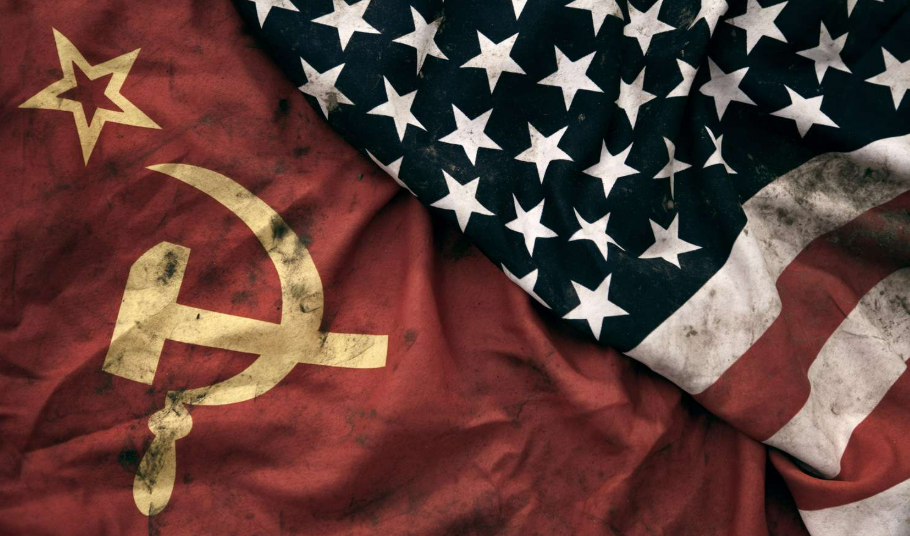
After the end of the Second World War, the world was divided into two major power blocs led by the United States and the Soviet Union, a situation known as bipolarity which resulted in the Cold War. This chapter explains the nature of the Soviet system, the role of its leaders, and the reasons behind its collapse.
The disintegration of the Soviet Union in 1991 marked the end of bipolarity and led to the emergence of a unipolar world dominated by the United States. It also examines the consequences of this change, including new global conflicts, economic transformations, and its impact on countries like India.
Introduction
- After the Second World War (1945), the world was divided into two major power blocs.
- This division is called Bipolarity.
Meaning of Bipolar World
- Bi means two, polar means power centres.
- So, a bipolar world has two superpowers dominating world politics.
Two Superpowers after WWII
- United States of America (USA)
- Leader of the Capitalist / Democratic bloc
- Union of Soviet Socialist Republics (USSR)
- Leader of the Socialist / Communist bloc
Cold War
- The rivalry between USA and USSR is known as the Cold War.
- It was called a “cold” war because:
- No direct war was fought between the two superpowers
- They competed through ideology, military alliances, economic aid, and influence over other countries
Military Alliances
- USA led NATO (North Atlantic Treaty Organization)
- USSR led Warsaw Pact
Importance of USSR
- USSR was formed after the Russian Revolution of 1917.
- It became a superpower after WWII due to:
- Strong military
- Large territory
- Socialist economy
End of Bipolarity
- The chapter mainly discusses how this bipolar world ended with the disintegration of the USSR in 1991.
- This event changed the global power structure.
Significance of the Topic
- Helps us understand:
- Changes in world politics after the Cold War
- Emergence of new power centres
- Impact on countries like India
Topic-1: What was the Soviet System?
- The Soviet System was the political and economic system followed in the USSR (Union of Soviet Socialist Republics).
- It was based on the ideology of socialism and communism.
- The system aimed at equality, social justice, and ending exploitation.
Political Features of the Soviet System
- There was only one political party, the Communist Party.
- No multi-party system or free competition in elections.
- The Communist Party controlled:
- Government
- Judiciary
- Media
- The system did not allow political opposition.
Economic Features of the Soviet System
- The economy was a centrally planned economy.
- The state controlled all major industries like:
- Steel
- Energy
- Transport
- Private property was not allowed.
- The government decided:
- What to produce
- How much to produce
- Prices of goods
Social Features of the Soviet System
- The state provided basic needs to people:
- Employment
- Free education
- Free healthcare
- There was no unemployment in theory.
- The system promoted economic equality.
Role of the State
- The state played a dominant role in all aspects of life.
- Citizens had limited freedom of speech and expression.
- The government closely monitored public life.
Strengths of the Soviet System
- Rapid industrial development.
- Strong military power.
- Reduction in economic inequality.
- Improvement in literacy and healthcare.
Limitations of the Soviet System
- Lack of political freedom.
- No choice for consumers.
- Slow technological innovation.
- Excessive control by the state.
- Bureaucratic inefficiency.
Topic-2: Leaders of the Soviet Union
- The Soviet Union was led by powerful leaders who played an important role in shaping its political, economic, and foreign policies.h
- Leadership was mainly in the hands of the Communist Party.
Vladimir Lenin (1917–1924)
- Founder of the Soviet Union.
- Led the Russian Revolution of 1917.
- Established a socialist state based on Marxist ideas.
- Introduced one-party rule under the Communist Party.
- Believed in ending capitalism and private ownership of property.
Joseph Stalin (1924–1953)
- Took power after Lenin’s death.
- Introduced centralised planning and collectivisation of agriculture.
- Strengthened the Soviet military.
- Played a key role in defeating Nazi Germany in World War II.
- Ruled in an authoritarian manner with strict control over society.
Nikita Khrushchev (1953–1964)
- Criticised Stalin’s policies and started de-Stalinisation.
- Reduced fear and repression in society.
- Improved relations with the West to some extent.
- Involved in the Cuban Missile Crisis (1962) with the USA.
Leonid Brezhnev (1964–1982)
- Period marked by political stability but economic stagnation.
- Increased military spending.
- Strengthened Soviet influence in Eastern Europe.
- The system became rigid and less responsive.
Mikhail Gorbachev (1985–1991)
- Last leader of the Soviet Union.
- Introduced:
- Perestroika (economic reforms)
- Glasnost (openness and transparency)
- Reduced Cold War tensions with the USA.
- His reforms led to the disintegration of the USSR in 1991.
Topic-3: Gorbachev and the Disintegration
- Mikhail Gorbachev became the leader of the Soviet Union in 1985.
- He believed that the Soviet system needed major reforms to survive.
Gorbachev’s Reforms
1. Perestroika (Restructuring)
- Economic reform.
- Reduced centralised control over the economy.
- Allowed limited private ownership.
- Introduced market-based elements.
2. Glasnost (Openness)
- Political reform.
- Allowed freedom of expression.
- Reduced censorship on media.
- People could criticise the government.
Impact of Reforms
- Reforms weakened the Communist Party’s control.
- Political freedom increased demands for:
- Democracy
- National autonomy
- Economic problems worsened instead of improving.
- Corruption and inefficiency became more visible.
Role in Disintegration
- Many Soviet republics demanded independence.
- The central authority became weak.
- In 1991, the USSR officially disintegrated into 15 independent republics.
- Russia emerged as the successor state.
Topic-4: Why did the Soviet Union Disintegrate?
The disintegration of the USSR in 1991 was the result of several political, economic, and social reasons.
1. Economic Weakness
- The Soviet economy was centrally planned and rigid.
- It failed to meet the needs and aspirations of the people.
- Shortage of:
- Consumer goods
- Modern technology
- Excessive spending on military and arms race weakened the economy.
2. Political Factors
- The one-party system limited democracy.
- People had no political freedom for a long time.
- The Communist Party lost public support.
- Gorbachev’s reforms weakened party control.
3. Gorbachev’s Reforms
- Perestroika reduced state control over the economy.
- Glasnost allowed criticism of the government.
- These reforms:
- Exposed system failures
- Reduced fear of authority
- Encouraged demands for change
4. Rise of Nationalism
- The USSR consisted of many republics and nationalities.
- People demanded:
- Greater autonomy
- Independence
- Nationalist movements grew stronger after political freedom increased.
5. Loss of Control over Eastern Europe
- Soviet Union reduced its control over East European countries.
- These countries moved away from socialism.
- This weakened the USSR’s global influence.
6. Role of the Communist Party
- Party became bureaucratic and corrupt.
- Failed to reform itself in time.
- Lost the ability to manage crises effectively.
Topic-5: Timeline of Disintegration of the Soviet Union
1917
- Russian Revolution takes place.
- Establishment of a socialist state under Vladimir Lenin.
1922
- Formation of the Union of Soviet Socialist Republics (USSR).
1985
- Mikhail Gorbachev becomes the leader of the Soviet Union.
- Introduces Perestroika (economic reforms) and Glasnost (political openness).
1989
- Soviet control over Eastern European countries weakens.
- Communist governments collapse in Eastern Europe.
- Fall of the Berlin Wall.
1990
- Several Soviet republics demand greater autonomy.
- Lithuania becomes the first republic to declare independence.
- Communist Party loses its monopoly over power.
1991 (August)
- Failed coup attempt by hardline communists against Gorbachev.
- Power of the Communist Party collapses.
- Authority of the central government weakens further.
1991 (December)
- Leaders of Russia, Ukraine, and Belarus declare the end of the USSR.
- USSR officially disintegrates.
- Emergence of 15 independent republics.
- Russia becomes the successor state.
Topic-6: Consequences of Disintegration
The disintegration of the USSR in 1991 had major political, economic, and global consequences.
1. End of Bipolarity
- The collapse of the USSR marked the end of the bipolar world order.
- The USA emerged as the only superpower.
- World politics became unipolar for some time.
2. Emergence of New Independent States
- The USSR broke into 15 independent republics.
- Countries like:
- Russia
- Ukraine
- Kazakhstan
- Uzbekistan
became sovereign states.
- Russia was recognised as the successor state of the USSR.
3. Political Changes
- End of one-party communist rule in most former Soviet republics.
- Many countries adopted:
- Democracy
- Multi-party systems
- Political instability was seen in some regions.
4. Economic Changes
- Shift from socialist economy to market economy.
- Introduction of:
- Private ownership
- Free market reforms
- Initially, people faced:
- Unemployment
- Poverty
- Inflation
5. Impact on Eastern Europe
- East European countries became independent from Soviet control.
- They moved towards:
- Democracy
- Capitalist economies
- Joined international organisations like NATO and European Union.
6. Impact on India
- India lost a close and trusted ally.
- India had to redefine its foreign policy.
- Led to stronger relations with:
- USA
- Other global powers
Topic-7: Shock Therapy in Post-Communist Regimes
- After the disintegration of the Soviet Union, many post-communist countries adopted a policy called Shock Therapy.
- It was a method of rapid transition from a socialist economy to a capitalist market economy.
Meaning of Shock Therapy
- Shock Therapy means sudden and drastic economic reforms.
- Aim:
- To end state control over the economy
- To introduce free market principles quickly
Main Features of Shock Therapy
1. Market Economy
- State control over industries was reduced.
- Private ownership was encouraged.
- Government stopped controlling prices of goods.
2. Trade Liberalisation
- Restrictions on imports and exports were removed.
- Foreign companies were allowed to invest.
3. Financial Reforms
- State subsidies were withdrawn.
- Currency was made convertible.
- Focus on reducing government spending.
Countries that Adopted Shock Therapy
- Russia
- East European countries
- Some former Soviet republics
Impact of Shock Therapy
Positive Effects
- Created conditions for a market economy.
- Increased foreign investment.
- Integrated these countries into the global economy.
Negative Effects
- Sudden unemployment increased.
- Rise in poverty and inequality.
- Loss of state welfare benefits.
- Growth of corruption and black market.
Topic-8: Consequences of Shock Therapy
Shock Therapy was adopted by many post-communist countries after the disintegration of the Soviet Union. It had mixed consequences.
1. Economic Consequences
- Sudden shift to market economy.
- State industries collapsed due to lack of support.
- Rise in:
- Unemployment
- Inflation
- Many people lost:
- Jobs
- Savings
- Growth of private sector, but benefits were uneven.
2. Social Consequences
- Increase in poverty and inequality.
- End of state welfare system (free education, healthcare, jobs).
- Decline in standard of living for large sections of society.
- Rise in crime and corruption.
3. Political Consequences
- People lost faith in new democratic institutions.
- Political instability in many countries.
- Weak governments and lack of effective governance.
4. Emergence of Oligarchs
- Wealth got concentrated in the hands of a few powerful people.
- These elites controlled:
- Industries
- Media
- Politics
5. Long-term Impact
- Some countries gradually stabilised their economies.
- Others continued to face economic hardship.
- Shock Therapy permanently ended the socialist system.
Topic-9: Tensions and Conflicts
- The disintegration of the Soviet Union created political instability in many regions.
- New independent countries faced internal and external tensions.
1. Ethnic and Nationalist Conflicts
- The USSR had many ethnic groups and nationalities.
- After independence:
- Ethnic identities became stronger
- Conflicts erupted over territory and power
- Examples:
- Chechnya (conflict with Russia)
- Georgia and its regions
- Azerbaijan–Armenia conflict
2. Border Disputes
- Borders were not clearly defined during the Soviet period.
- After disintegration:
- Border disputes emerged between new states
- Led to political and military tensions.
3. Economic Tensions
- Sudden economic changes created:
- Poverty
- Unemployment
- Unequal distribution of resources increased dissatisfaction.
- Economic hardship led to social unrest.
4. Political Instability
- New countries lacked strong democratic institutions.
- Frequent changes in government.
- Rise of authoritarian leaders in some regions.
5. Role of External Powers
- NATO expanded towards Eastern Europe.
- Russia felt threatened by Western influence.
- This created new tensions between Russia and the West.
Topic-10: India and Post-Communist Countries
- The disintegration of the Soviet Union in 1991 led to the emergence of post-communist countries.
- India had to re-adjust its foreign policy after the end of the Cold War.
India–USSR Relations (Before 1991)
- USSR was India’s close and trusted ally.
- Cooperation in:
- Defence
- Heavy industries
- Science and technology
- Treaty of Peace and Friendship (1971) strengthened relations.
Impact of Disintegration on India
- India lost a major strategic partner.
- Trade and defence cooperation declined initially.
- India faced the challenge of adapting to a unipolar world.
India’s Relations with Russia
- Russia emerged as the successor state of the USSR.
- India and Russia continued friendly relations.
- Cooperation in:
- Defence
- Energy
- Space technology
- Relations based on mutual trust and strategic partnership.
India’s Relations with Other Post-Communist Countries
- India developed ties with:
- Central Asian republics
- East European countries
- Focus areas:
- Trade
- Energy security
- Cultural exchanges
Role of Economic Reforms
- India also adopted economic reforms in 1991.
- This helped India:
- Engage with new global economic systems
- Improve relations with multiple countries
Topic-11: Middle East Crisis – Afghanistan and Gulf War
Afghanistan Crisis
Background
- Afghanistan became an important area during the Cold War.
- In 1979, the Soviet Union invaded Afghanistan to support a communist government.
Soviet Invasion (1979)
- USSR wanted to:
- Maintain influence in Afghanistan
- Prevent the spread of anti-communist forces
- USA supported Afghan fighters called Mujahideen.
- This turned Afghanistan into a Cold War battleground.
Consequences
- Long and costly war for the USSR.
- Heavy economic and military burden.
- Contributed to the weakening of the Soviet Union.
- After Soviet withdrawal (1989), Afghanistan faced:
- Civil war
- Rise of Taliban
Gulf War (1990–91)
Background
- In 1990, Iraq (led by Saddam Hussein) invaded Kuwait.
- Iraq wanted control over Kuwait’s oil resources.
US-led Coalition
- The United States formed a coalition of 34 countries.
- The war was fought under the UN mandate.
- Iraq was defeated in 1991.
Significance of Gulf War
- Showed the rise of the USA as a unipolar superpower.
- Demonstrated US military dominance.
- Highlighted importance of oil politics in the Middle East.
- Increased US influence in the region.
Topic-12: CIS and the 21st Century (Arab Spring)
CIS (Commonwealth of Independent States)
Formation
- After the disintegration of the USSR in 1991, many former Soviet republics formed the CIS.
- It was created in December 1991.
- Founding members:
- Russia
- Ukraine
- Belarus
Purpose of CIS
- To maintain:
- Economic cooperation
- Security cooperation
- Cultural ties
- To manage a peaceful transition after the breakup of the USSR.
Features
- Loose organisation (not as strong as the USSR).
- Russia played a dominant role.
- Helped avoid large-scale violent conflicts among member states.
Importance
- Maintained some unity among former Soviet republics.
- Reflected the continued influence of Russia in the region.
Arab Spring (21st Century)
Meaning
- The Arab Spring refers to a series of pro-democracy movements and protests in the Arab world.
- Started in 2010–2011.
- Began in Tunisia and spread to:
- Egypt
- Libya
- Syria
- Yemen
- Bahrain
Causes
- Unemployment
- Corruption
- Authoritarian rule
- Lack of political freedom
- Economic inequality
Impact
- Governments were overthrown in:
- Tunisia
- Egypt
- Libya
- Civil wars broke out in:
- Syria
- Yemen
- Political instability in many countries.
Conclusion
The disintegration of the Soviet Union brought a major transformation in world politics by ending the bipolar world order and establishing the United States as the sole superpower. It led to the emergence of new independent states and a shift towards democracy and market economies in many regions.
However, it also resulted in political instability, economic challenges, and new conflicts in different parts of the world. Overall, the end of bipolarity reshaped the global power structure and continues to influence international relations in the modern world.
Detailed notes of other chapters:
Contemporary Centres of Power: Class-12th Political Science Chapter-2 ( Easy NCERT Notes )
Politics of Planned Development: Class-12th Political Science Chapter-3 ( Easy NCERT Notes )